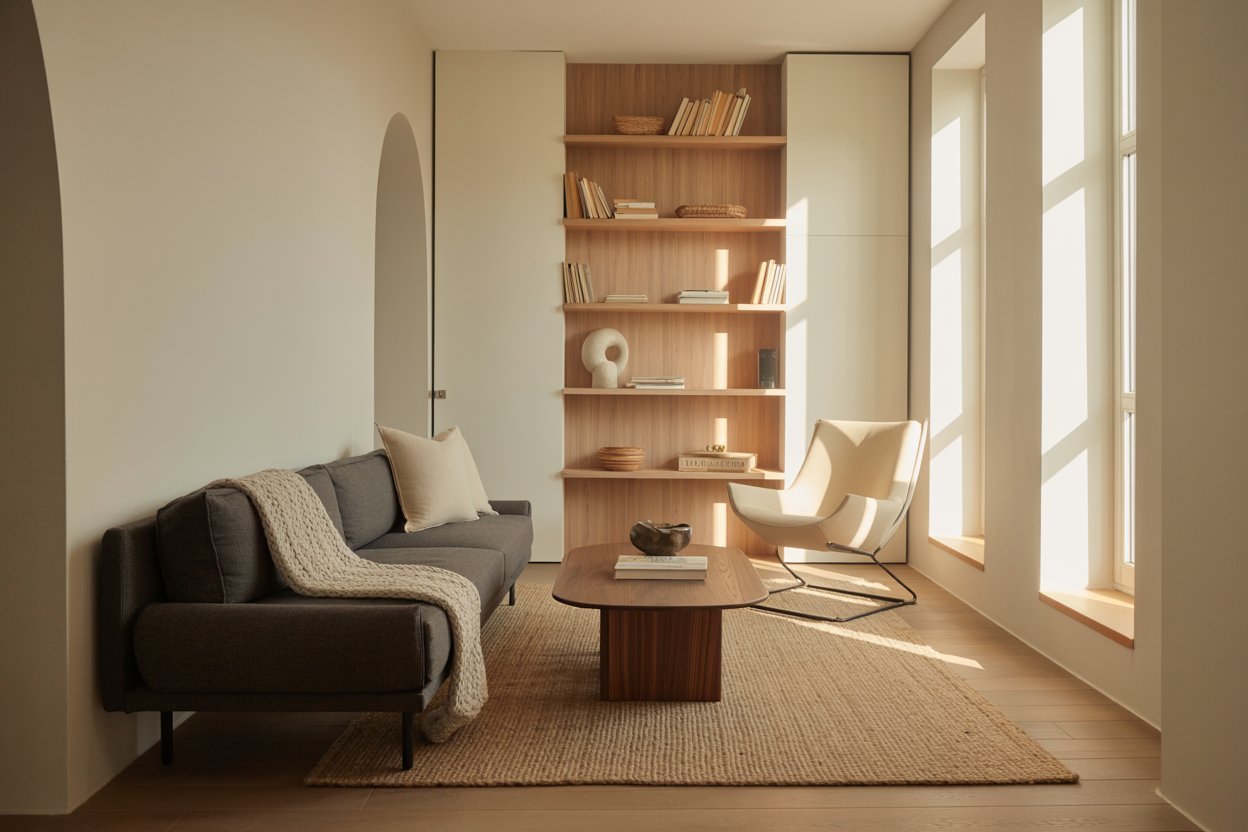
A narrow living room is one of the trickiest spaces to design. It often feels long and tight, with little room to bring in furniture without crowding walkways. But when styled intentionally, a narrow living room can feel surprisingly spacious, elegant, and warm—almost like a thoughtfully designed studio or boutique lounge.
The key is not to fight the shape, but to use it. Long rooms offer natural direction, flow, and intimacy. With the right layout, your space won’t feel cramped; it becomes a curated path that guides the eye and the movement.
Below are expert design strategies that turn tight living rooms into balanced, inviting spaces.
Use Lightweight, Open-Base Furniture
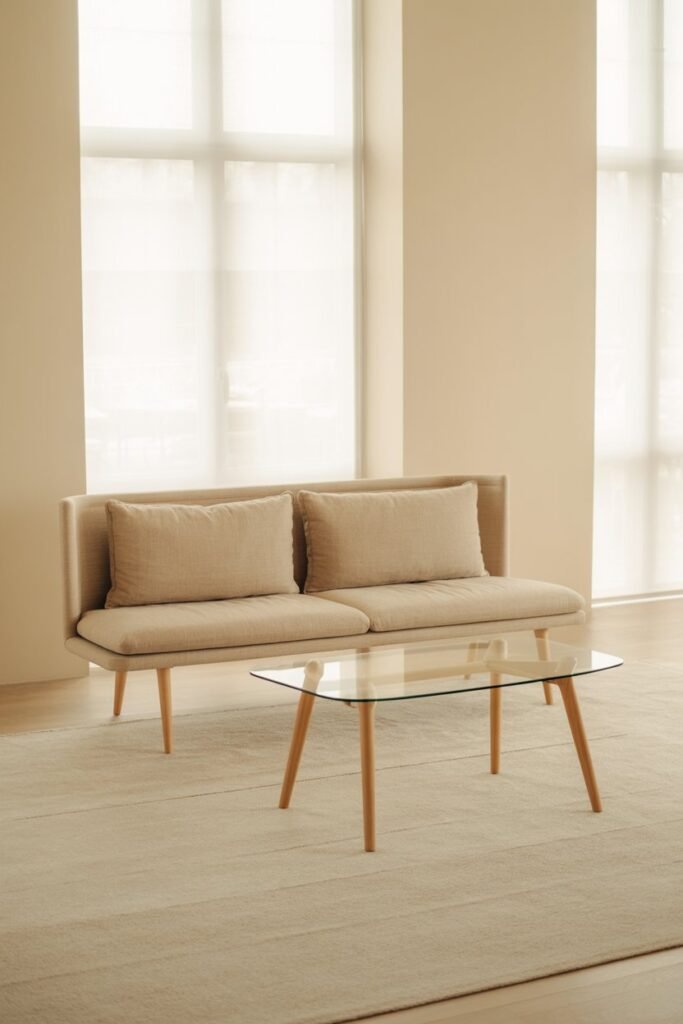
In tight spaces, heavy furniture makes the room feel closed. Open-base furniture creates the opposite effect. Slim legs, lifted silhouettes, and clean frames allow visual movement under and around the furniture, instantly making a narrow room feel bigger.
How to style it
Look for sofas and chairs that are slightly raised with slim arms and minimal padding. Choose coffee tables made of glass, metal frames, or light wood rather than thick, bulky pieces. Even a side table matters—replace chunky cubes with sleek C-tables, nesting tables, or narrow pedestals. The more floor you see, the more open the room feels.
Place the Sofa Along the Longest Wall for Stability
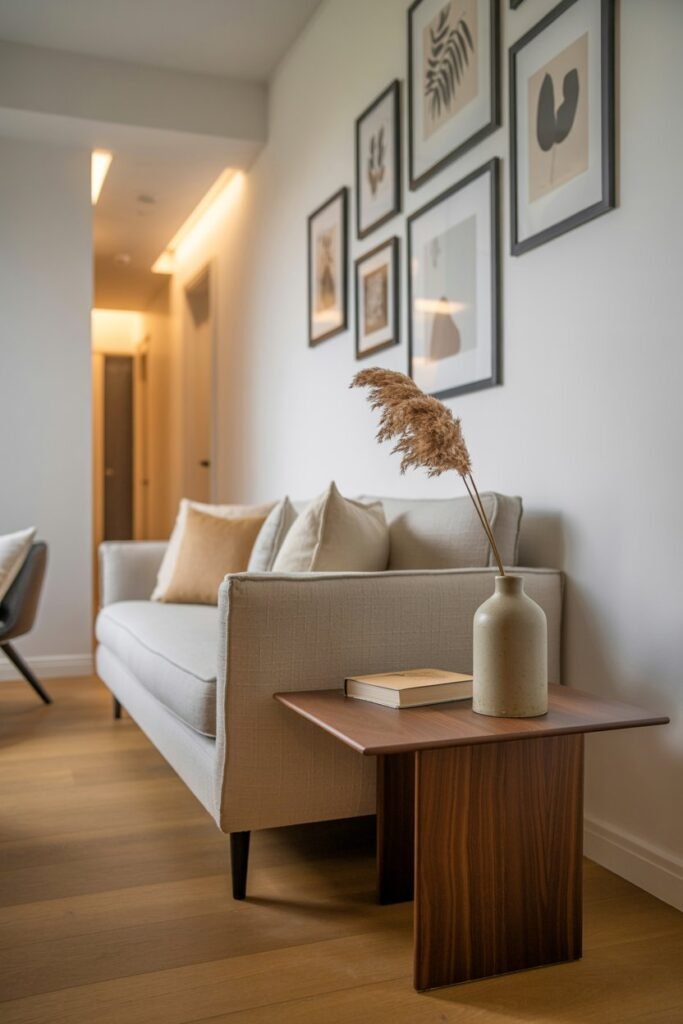
A narrow room needs a strong anchor. The sofa provides that—but only if it doesn’t block pathways. Placing it against the longest wall creates balance, keeps walkways open, and allows the rest of the furniture to complement the room instead of competing with it.
How to style it
Choose a sofa width that doesn’t overpower the room. If the sofa is deep, balance it with slender chairs or stools across from it. Add height through a slim floor lamp or wall-mounted lighting instead of wide side tables. Keep decor on the wall above it vertical and understated to lift the eye upward rather than outward.
Float Smaller Furniture Pieces to Create Flow
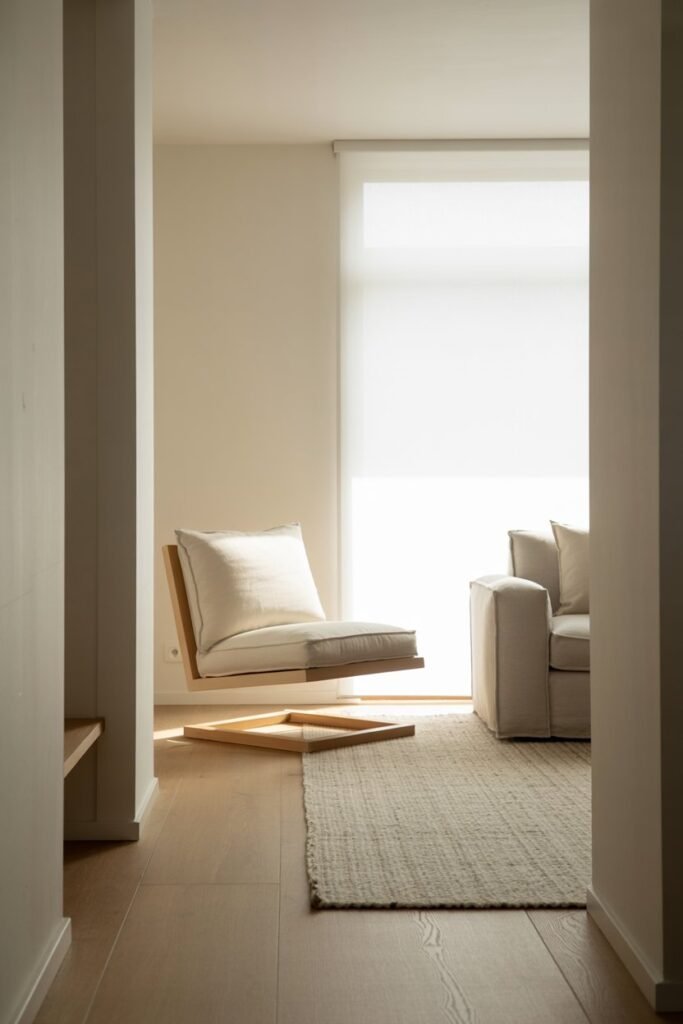
In narrow living rooms, pushing all furniture against the walls can make the space feel like a hallway. Floating small pieces—like an accent chair, ottoman, or slim console—helps define zones without overcrowding.
How to style it
Float one accent chair across from the sofa, but leave several inches behind it to create visual depth. Consider a petite console table floating behind the sofa with a lamp and decor. These subtle shifts introduce dimension, making the room feel layered and intentionally styled, not just filled.
Choose One Main Focal Point to Avoid Visual Clutter
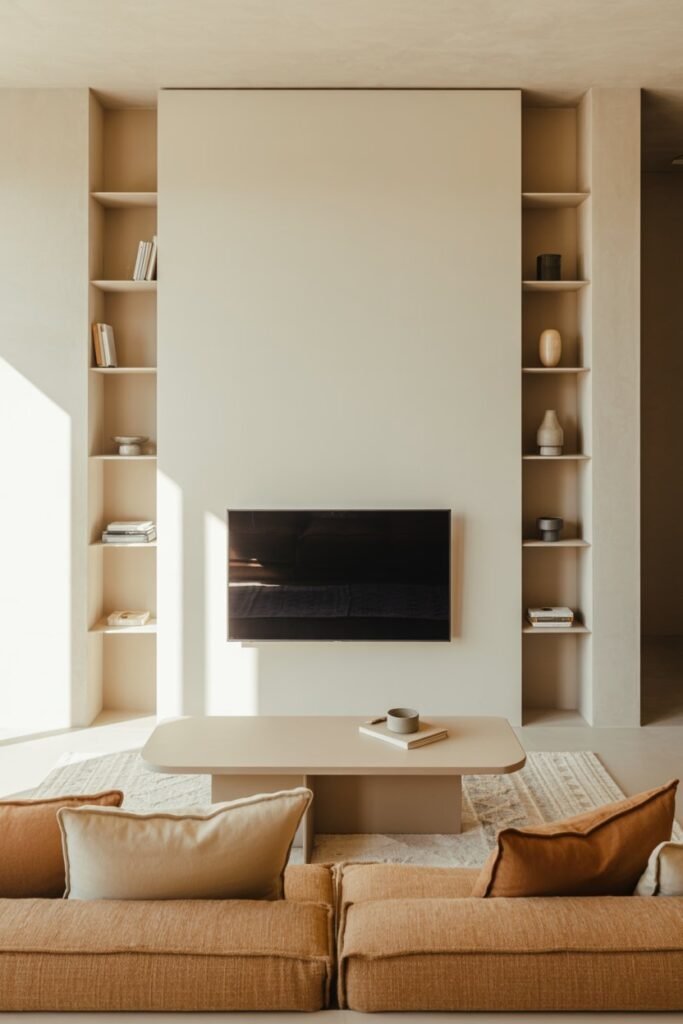
A narrow room can’t support multiple competing focal points. Too many stand-out elements make the walls feel as if they’re closing inward. Instead, decide on a single dominant feature—such as a fireplace, art display, media wall, or sculptural bookshelf—and keep the surrounding elements supportive and quiet.
How to style it
If the focal point is a TV wall, incorporate vertical shelving to frame it and lead the eye upward. For fireplaces or bold artwork, use softer seating and minimal accessories to balance the impact. Choose quieter textures and restrained decor across the room so the space feels harmonious and grounded.
Use a Full-Size Rug to Connect the Space
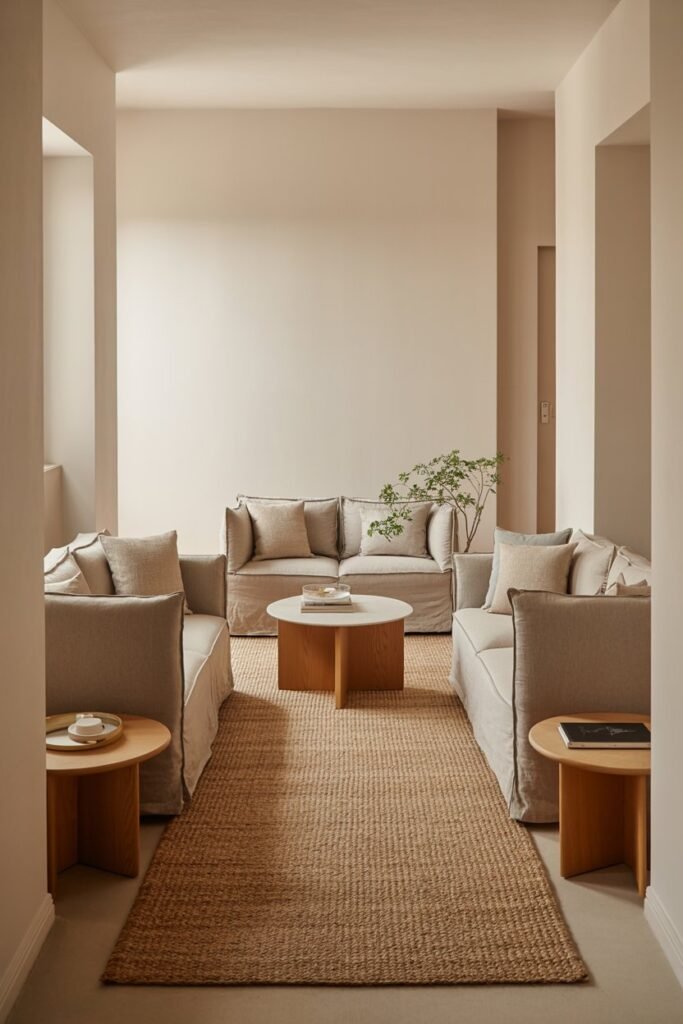
Small rugs shrink the room visually because they break up the floor plane. The secret to making a narrow living room feel bigger is a larger rug that lets all seating feel like one intentional arrangement.
How to style it
Choose a rug long enough to sit under at least the front legs of the sofa and chairs. Look for simple patterns or calming neutrals that run horizontally or subtly lengthen the room. Avoid tiny accent rugs entirely—they visually chop the space and disrupt flow.
Prioritize Vertical Storage and Wall-Mounted Solutions
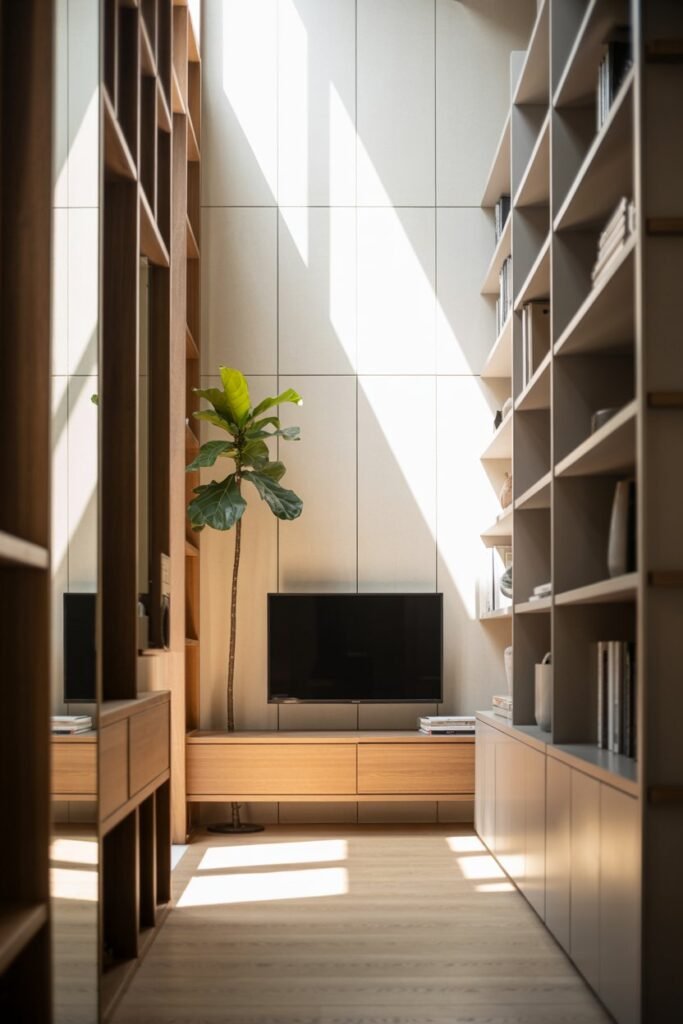
Floor space is precious in a narrow room, so bulky consoles or low wide shelving can easily overtake it. Vertical or wall-mounted elements free up walking room and maintain a lean silhouette throughout the space.
How to style it
Use tall, slim shelving instead of wide bookcases. Mount the TV to eliminate a heavy media console. Add narrow floating shelves for books or decor instead of deep cabinets. Choose closed storage sparingly, keeping most surfaces calm and clutter-free to avoid visual heaviness.
Final Thoughts
A narrow living room doesn’t need oversized furniture or elaborate layouts to feel balanced—it simply needs intention. When every piece has a purpose, the room becomes more livable and visually serene.
Instead of trying to widen the room, celebrate its length. Select furniture that lifts off the floor, anchor the space with a single strong focal point, and invest in smart scale—large enough to feel designed, slim enough to keep movement easy.
A narrow living room isn’t a challenge to solve. It’s a shape to refine. And with thoughtful styling, it becomes a calm, inviting space that feels curated rather than cramped.